The Uttar Pradesh government is conducting large-scale training of crime scene experts at the Uttar Pradesh State Institute of Forensic Science (UPSIFS) to modernise policing and make it more result-oriented.

The Kerala Crime Branch has arrested Raveendran Nair, former caretaker of Jayamadhavan Nair, for his murder nine years ago. The investigation, initially treated as an unnatural death, gained momentum through forensic evidence, contradictory statements, and a forged will, leading to the unravelling of a property dispute motive.

J R D Tata, chairman of the Tata group from 1938 to 1991, said that whenever he had to make a difficult decision, he would ask himself, what will be good for India, and what will be good for the Tatas. If he had a doubt, he would decide in favour of India. In the long run, it would turn out well for the Tatas too, he said, points out Arun Maira.

All five Indian teenagers who competed at the International Physics Olympiad 2026 won gold medals; thanks to their achievement, India shared the world No 1 ranking with China, Kazakhstan, Russia, South Korea and Taiwan.

The scenes are same; placards, viral videos, riot, police but the grievances could hardly be more different, notes Abhay Jere, ex-Vice Chairman, AICTE.

'It is to observe the Sun continuously that you have the Aditya L1 mission.' 'It is in a position from where it can observe the Sun continuously.'

A report by Scholars at Risk, 'Free to Think 2026', states that academic freedom in India is "severely restricted" due to increasing government influence over higher education, university governance, and curbs on student expression. India is listed among six countries in this category, with its Academic Freedom Index score sharply declining. The report cites instances of faculty dismissals, event cancellations, and pressure on student protests, highlighting the alleged use of the UGC as a vehicle for state influence.

Researchers at BRIC-RGCB in Thiruvananthapuram have developed a novel nanopore-based sensing technology. This innovation allows for the early and highly sensitive detection of biomarkers associated with neurodegenerative diseases like Parkinson's and ALS, addressing a critical challenge in current diagnostic methods. The technology, published in Nature Nanotechnology, uses self-assembling dual-diameter nanopore sensors to identify disease-specific biomarkers even at low concentrations.

Of the 37,448 candidates registered for the Foreign Medical Graduate Examination (FMGE) in June, 36,288 appeared and 4,635 qualified.

Their message is blunt: Public scientific wealth should not be transferred at what they describe as 'throwaway prices'.capability, recruitment, promotional avenues and the voice of its employees.

Indian quarter-miler Vishal TK, fresh from a historic season where he became the first Indian man to break the 45-second barrier in the 400m, is set to make his Commonwealth Games debut in Glasgow. The 22-year-old, a four-time national champion and a key member of India's relay teams, is confident of delivering a breakthrough performance, crediting his rigorous training at Inspire Institute of Sports and the support system for his preparation. He aims to continue raising the bar for Indian athletics on the global stage.

Karnataka Chief Minister D K Shivakumar met with AI major Anthropic to discuss a long-term partnership aimed at accelerating AI adoption across governance, education, healthcare, research, and the state's startup ecosystem. The collaboration focuses on deploying AI solutions responsibly, ensuring data privacy, and developing AI-focused skilling programmes and an AI University.
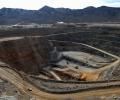
Union Mines Minister G Kishan Reddy announced that the Indian government is intensifying its support for private mining entrepreneurs seeking critical mineral opportunities abroad, working with the Ministry of External Affairs and appointing mineral officers in embassies to facilitate these efforts.
Researchers at IIT Indore have developed a groundbreaking method to convert carbon dioxide and glycerol, two common waste materials, into valuable green chemicals like lactic acid and formic acid in just seven minutes. This low-energy process uses a specially designed ruthenium-based catalyst and microwave heating, offering a sustainable solution for waste management and green manufacturing.

Olympic medallist PV Sindhu has initiated the 'PV Sindhu Centre for Sports Excellence' in Visakhapatnam, with Andhra Pradesh IT Minister Nara Lokesh performing the groundbreaking. This integrated sports and education ecosystem aims to provide world-class coaching, sports science, and academic support across seven disciplines, establishing Visakhapatnam as a national sports hub.
Odisha-based Serendipity Space successfully demonstrated drug crystallisation processes on a satellite prototype in a near-space mission. This breakthrough aims to enable pharmaceutical manufacturing in low Earth orbit, leveraging microgravity to create superior drug crystal structures for enhanced solubility, stability, and effectiveness. The mission tested core technologies, including an autonomous pharmaceutical factory, and was inspired by advancements made on the International Space Station.

'When a glacier collapse or a major flood event does occur, the water will simply reclaim its original path, and anything built in that path will be swept away.'
A recent study by the Indian Institute of Science (IISc), Bengaluru, has identified self-fertilisation, or uniparental reproduction, as a critical trait enabling plants to become invasive. Researchers examined 28 species from the daisy family, finding that all 11 invasive species studied could reproduce uniparentally, unlike most native and non-invasive alien species. This ability allows a single plant to establish new populations, displacing local flora and altering ecosystems, highlighting the importance of reproductive strategy in weed-risk assessment.
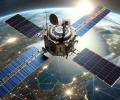
Nebex, founded by former Axiom Space executives, aims to build commercial infrastructure for the global space economy.

India too can rise to the top if the 1.4 billion Indians back home are given better opportunities to use their innate talent and capacity to work hard, with right incentives in a more meritocratic rules-based system, asserts Ajay Chhibber.

Few leaders since Independence have been able to establish such a direct connection with the electorate or shape the national conversation to the extent that Narendra Modi has done over the past decade, points out former Union minister Dr Karan Singh.
Uttar Pradesh Governor Anandiben Patel addressed AI Manthan 2.0, advocating for the comprehensive integration of Artificial Intelligence across all university subjects rather than as a standalone course. She urged universities to develop clear, time-bound AI roadmaps covering education, research, healthcare, and agriculture, emphasising indigenous AI development, employment creation, and the importance of "Safe and Trusted AI." The event also saw the formation of an AI Policy Advisory Group and an AI Implementation Group to drive these initiatives.
Researchers at IIT-ISM Dhanbad have been granted an Indian patent for an electrochemical reactor designed to recover copper from industrial wastewater. This innovative technology offers an environmentally sustainable solution for resource recovery and wastewater treatment, particularly benefiting the mining and metallurgical sectors.
Researchers at the Indian Institute of Science (IISc) in Bengaluru have discovered that oral cancer cells are vulnerable to low-frequency ultrasound, a technique that can selectively destroy them while leaving healthy cells unharmed. This vulnerability is linked to reduced levels of the mechanosensory protein Tropomyosin 2.1. The study suggests ultrasound mechanostimulation could offer a safer, more targeted treatment for oral and other accessible cancers.

There is no answer to the question of how IN-SPACe invited EOIs for ISRO's mature rockets and whether it was based on any government policy decision.
Professor Deepak Dhar of the International Centre for Theoretical Sciences (ICTS) has been awarded the prestigious 2026 Dirac Medal for his significant contributions to statistical mechanics and complex systems. He shares the honour with three other scientists for their pioneering work extending statistical mechanics into diverse fields like AI and theoretical neuroscience.

The latest QS World University Rankings reveal that several Indian institutions, including IITs, JNU, and BITS Pilani, have secured positions among the world's top 50 in various subjects.

The question for the next 20 years is not whether India can become a $5 trillion or $10 trillion economy. Those are attractive targets, but the real question is whether India can create enough productive jobs, educate its children properly, make its cities liveable, and give hundreds of millions of people a substantially better life, asserts Ramesh Menon.

Researchers at Delhi's Indraprastha Institute of Information Technology have developed 'MutAIverse', a generative AI platform designed to decode DNA damage and identify potential causes of cancer. Tested on head and neck cancer patients in Guwahati, the platform successfully traced exposure to smokeless tobacco as a contributing factor. This innovation aims to shift focus from just diagnosis to understanding causative factors, potentially aiding in prevention and protection.

The scholarship covers 100 per cent of the annual tuition fee, hostel and mess charges and provides a laptop in the first year.

Shubham Kumar from the IIT-Delhi zone has secured an All India Rank (AIR) in the IIT-JEE Advanced 2026 results declared by IIT-Roorkee.

Indian pharmaceutical companies are not rushing to relocate manufacturing to the United States despite former President Donald Trump's renewed threat of tariffs up to 200 per cent on imported generic drugs. Instead, they are leveraging existing US plants, contract manufacturers, and making selective investments in complex products while maintaining India as their primary production hub.
The University of Liverpool and the Indian Institute of Science (IISc) have established a joint seed fund to promote research and innovation collaborations in areas such as AI, biomedicine, quantum technology, and space.

'We're doing a lot of work around work-integrated learning, providing students with every opportunity to take at least part of their education as a practical work-based experience.'

The Wrestling Federation of India (WFI) has renewed its partnership with the Inspire Institute of Sport (IIS) for another three years, extending their collaboration until March 2029. This agreement will see IIS continue to support WFI's national wrestling programmes across all levels, focusing on high-performance training, sports science, and athlete development.

A Kishore Kumar song, a birthday cake, a prince's break from protocol to thank his driver, a Persian painting on the ceiling of the presidential residence -- the BRICS Summit had many memorable moments.

Russian President Vladimir Putin has proposed a new investment platform, based on the New Development Bank (NDB), to fund projects in trade, infrastructure, logistics, and technology across BRICS nations, emphasising that the grouping's expanding economic cooperation is not 'against anyone' but aims to advance members' national interests.
Indian researchers from ICMR-National Institute for Research on Women's Health and IIT Bombay have developed an indigenous "placenta-on-chip" platform. This microphysiological system mimics the human placental barrier, reproducing essential functions like hormone production and nutrient transfer. It offers a simple, scalable tool for studying placental biology, pregnancy complications, and drug effects, aiming to reduce reliance on animal experimentation.

Many successful careers begin from ordinary colleges, says rediffGURU Radheshyam Zanwar as he guides worried a class 12 student who was unable to secure admission at an IIT.
With over a million Indians residing in the UAE, there is need to set up more Indian institutes of higher education in the emirates, Human Resources Development Minister Arjun Singh has said.
